Ages: 7-11
Get your children to use this free resource to help them work out the first eight square numbers. Can they work out the ninth by themselves?
This resource comes from our Square Numbers Activity Pack. Find out more at Teaching Packs.

Get your children to use this free resource to help them work out the first eight square numbers. Can they work out the ninth by themselves?
This resource comes from our Square Numbers Activity Pack. Find out more at Teaching Packs.

Review your children’s knowledge of vocabulary linked to the Victorians with this handy word search!
Fifteen different words are included on the sheet below. Could your children write definitions of each term when they have found them in the grid?
If you would like us to make word searches for other topics, let us know. Leave a comment below, or use our contact form to get in touch.

Buy This Book * More books by Tim Hopgood
Matisse is a young snail who loves to create beautiful drawings with his trail. The trouble is most of the time people are far too busy to even notice them. It’s only when a child notices Matisse’s beautiful trails that his art is finally celebrated – and they inspire a whole class of children to get creative too!
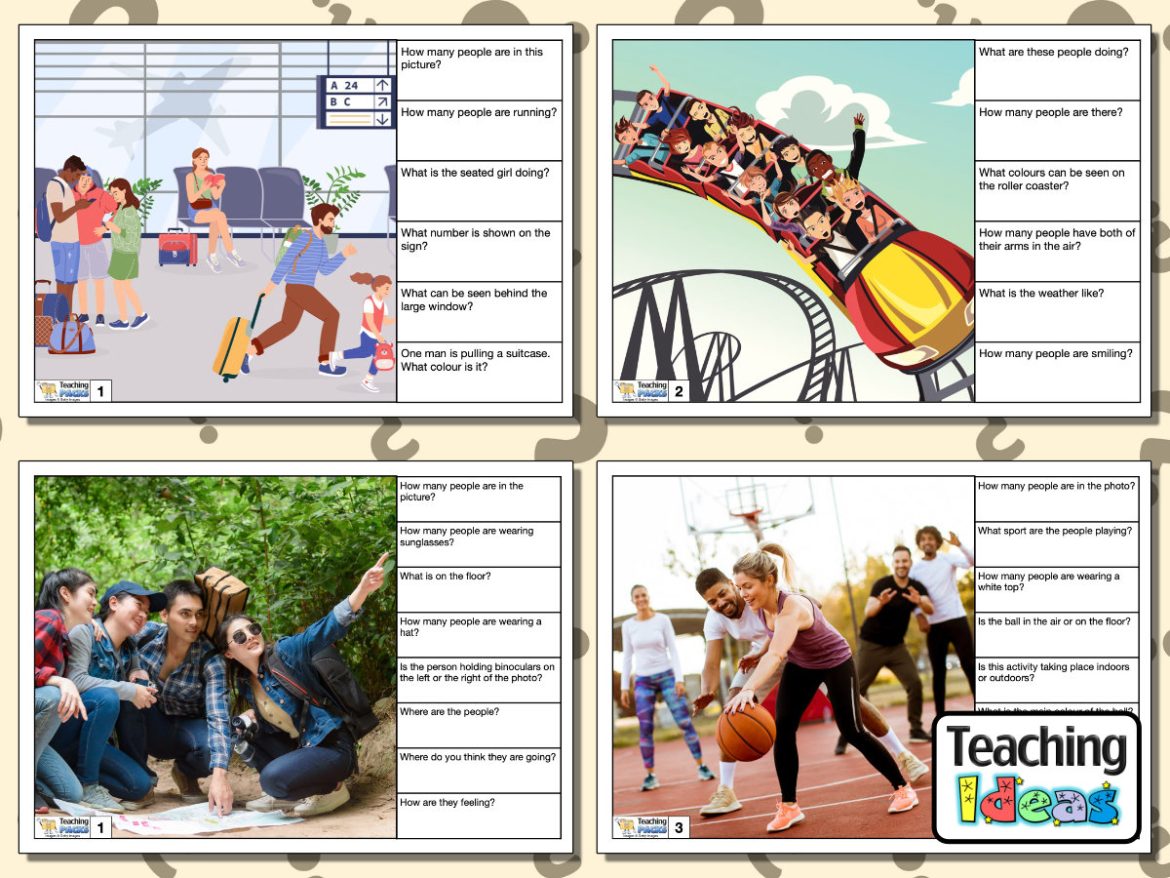
Test your children’s observation, inference and memory skills with these fantastic picture quizzes!
This resource comes from our Picture Quizzes Teaching Pack. These resources have been incredibly popular with our members, so let us know if you use them, too. Find out more at Teaching Packs.

Start-of-the-day activities are a great way for children to consolidate specific skills, like times tables, and develop their thinking skills. They can also be used for retrieval practice, reviewing their learning and readying them for the next step.
How do you manage Start of the Day Activities?
There are several options when it comes to organising the start of the day. Some classes use a “menu” of learning activities that children can select from; others allocate activities to specific groups on a timetable or have a different activity for everyone, depending on the day of the week. Finding what works for you and then sticking to the basic structure is helpful for children so they know what is expected and can get on independently. It also allows adults to welcome children and talk to parents, knowing the rest of the children are calmly occupied.
What kind of activities can be used at the start of the day?
Once you have decided how you will manage your activities, the next step is to find activities that the children can access and complete independently. For the first few days, keep the activities straightforward and focus on establishing the routine so children become confident. Once that groundwork has been completed, you can try a greater range.
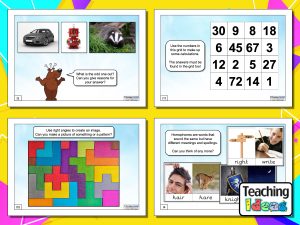
Try ideas from one of our popular Early Morning Activity Packs: These easy-to-use packs are packed full of activities that are ready to display on the board or print out as cards.
We have collected some of our favourite early morning activities below:
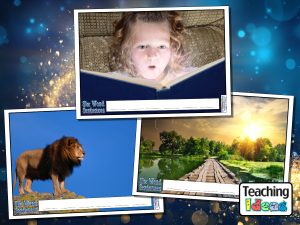
Some of our wonderful followers have also shared the following ideas:
Lara Savory:
We have four activity starters on the board, a selection from:
This image shows one way of presenting these activities:

Andy260:
We have a wake-up and work circuit, just 10-20 minutes at the start of the day with year 1,
The children have now embraced this rota and come to school earlier, so they get this fun 10 minutes in. So boosted our attendance. 🙂
Mrdoctorwhomad:
A mixture, depending on what day it is, or what the first lesson is
Rachel:
EYFS – I always start the day with a caption challenge (phase 3 sentence), a writing challenge (phase 2/3 CVC words and a sentence), a maths challenge with repeating patterns/missing numbers from sequence/ addition and subtraction sums/ what is the name of this 3d shape, and a body challenge “Can you do this? and a picture of a child either rolling his tongue, spreading his fingers, etc, somewhere in the provision (and children choose to do it or not). Children love sharing their attempts at the challenges in morning diary time, and it lends itself to talking about what they think they might need to practise that day!
If you have any other ideas or suggestions, please leave a comment below…

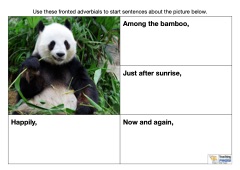
If you’re teaching your children about starting sentences with fronted adverbials, then this free resource is for you!
Use the sentence starters to help you create sentences using fronted adverbials correctly.
This resource comes from our Fronted Adverbials Pack. Find out more at Teaching Packs.

Buy This Book * More books by Jane Clarke
There’s no place like home, but poor Florence Firefly is lost, and there are so many bright lights shining in the night sky she doesn’t know which way to go. She’ll need some help to find her way back home.

Challenge your students to complete the missing half of this drawing of an Anglo-Saxon helmet!
This activity could be used during your History lessons, as an Art activity or when your children are learning about symmetry in Maths.
Let us know if you use this resource with your students. We always love hearing your feedback.

Can your children rearrange the letters to make the names of different types of natural disasters?
Let us know if you use this resource with your children and if you would like similar resources for other topics.

Buy This Book * More books by Carolina Rabei
When a little girl loses her fox toy, she discovers it’s been taken by a real-life fox cub, but the real fox cub is lost too – can she help it find its way home with the help of some other woodland creatures?