Ages: 7-11
Contributor:
Leanne Usher
Contributor:
Leanne Usher
A handy activity sheet that helps children to review three different Literacy concepts.
Thanks to Leanne for contributing this resource!
A handy activity sheet that helps children to review three different Literacy concepts.
Thanks to Leanne for contributing this resource!

What is Augmented Reality?
Augmented reality, often referred to as AR, is a form of technology that allows users to place digital objects and information in the real-world. Most commonly used with smartphones and tablets, AR is being used in a range of different industries and sectors, ranging from manufacturing and construction to leisure and retail. One of the biggest use cases for AR is education. Over the past decade, teachers have been bringing their classrooms to life through various apps readily available on the App and Play Store. Imagine, for example, a T-Rex roaming around the school hall or a Viking Longship being planted in the school playground. The possibilities for AR in education are endless.
How is AR different to VR?
Virtual Reality, or VR, uses a headset to transport a user into a digital 360-degree world. Using controllers, you can interact with different objects and activities in the virtual world. Unlike AR, VR doesn’t involve any interaction with the real world. For this reason, it’s important that you are aware of your surroundings and you have enough space to participate safely. The most commonly used VR headsets are sold by manufacturers like Oculus (owned by Facebook) and HTC (the smartphone company).
How can AR be used in the classroom?
Fortunately, AR is far more accessible for education than VR. Schools with IPads or tablets can get started with AR straight away. There are hundreds of apps available for education, and many of them are free to download. I’ve listed five of my favourites below:
There are hundreds of AR apps that can be used in the classroom! Steve Bambury and ICT Evangelist have compiled a periodic table of all the best educational AR and VR apps for IOS and this can be accessed here. Take a look and start downloading some of the AR apps to test in your classroom!
At PrimeVR, we are currently designing our own AR app that is going to provide a unique storytelling experience and will be a great stimulus for creative writing. More news and updates regarding this will be shared on our website soon.
Stuart Gent is the founder of PrimeVR, the UK’s leading VR workshop provider. Since setting up in 2017, PrimeVR has worked with over 500 schools and nearly 100,000 pupils to deliver engaging, curriculum-aligned KS2 workshops. PrimeVR is currently designing an AR app StoryBox AR that is going to provide a unique storytelling experience and will be a great stimulus for creative writing. More news and updates regarding this will be shared on their website soon.
This activity is similar to the Times Table Contest in that it is a fun and motivating activity which provides an opportunity to reinforce the children’s knowledge of their multiplication tables.
1) Decide on one of the multiplication tables to use for the activity (e.g. four times table).
2) Make everyone stand up and arrange them in a certain order. The children should know the order so they are aware of when it is their turn.
3) One child (chosen by the teacher) counts “1”. The child to his left then counts “2”. The next child counts “3”, and so on. When the children reach a multiple of four, they have to say “BUZZ”. So, the next child says “BUZZ”, and the child after him/her continues by counting “5”.
The sequence should therefore go like this: 1… 2… 3… BUZZ… 5… 6… 7… BUZZ… 9… 10… 11… BUZZ… 13… etc.
If anyone forgets to say BUZZ or says BUZZ in the wrong place, they are out, and they must sit down. The counting continues until the children reach ten / twelve times four (at the teacher’s discretion), after which the children start again at one.
The winners are the last three children left standing.
There are a number of variations for this game, which can be tried when the children have mastered the original:
1) Players say “BUZZ” when they reach a multiple of four and a number which contains the digit four….
1, 2, 3, BUZZ, 5, 6, 7, BUZZ, 9, 10, 11, BUZZ, 13, BUZZ, 15, BUZZ, 17, 18… etc.
2) Try playing the game using two multiplication tables. For example, say BUZZ when they reach a multiple of four, and say FIZZ when they reach a multiple of five. If they reach a multiple of four and five, say FIZZBUZZ!
1, 2, 3, BUZZ, FIZZ, 6, 7, BUZZ, 9, FIZZ, 11, BUZZ, 13, 14, FIZZ, BUZZ, 17, 18, 19, FIZZBUZZ!, 21… etc
3) No Hesitations Rule. When the children are confident playing the game, expect an immediate response when it is their turn. If there are any hesitations, Umms or Errs, they are out!
Child Soldiers International has shared a lesson plan that introduces issues surrounding the use of child soldiers. The lesson plan accompanies a PowerPoint presentation (which includes a video clip that we recommend viewing before presenting) and includes learning objectives, suggested resources and associated literacy activities. Also included is a world map as a teaching resource.
Two versions of these resources are available for ages 9-13 and ages 13-17. Please check the content and linked video before using them with your students.

 Child Soldiers Presentation (ages 9-13)


A set of Monster Maths Challenge resources are available to download below. These challenge children to answer 100 Maths calculations at varying degrees of difficulty. Answers are also provided for teachers! Here are some ideas for using them in the classroom:
We also have other Monster Maths pages for other topics:
A story about inclusion which can be read in assembly or class, or performed as a play.
Have the children sitting in a circle.
Bounce a ball to one of the children. They then choose another child and bounce the ball over to them, counting the bounces as they move towards them (e.g. 1, 2, 3, 4, 5…). The person they have bounced it to then bounces the ball and goes back to the empty space. As they travel they can either add or subtract the numbers or bounces (e.g. 5, 4, 3… or 6, 7, 8…).
The children really enjoy this game!

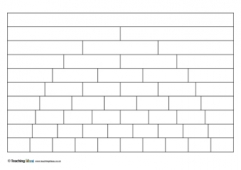
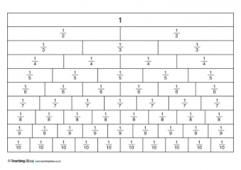
The resources below are fraction grids that you can use in your Maths lessons. One is blank (so that your children can label it), and one is already labelled.
If you have any requests for other types of paper templates, please get in touch!

This is a basic starting point for parachute games. Get everyone to spread out evenly around the chute and hold the edge. Pull the chute taut and crouch down. On the command MUSHROOM, everyone stands and pulls the chute upwards, causing the chute to fill with air and rise like a giant mushroom.
Mushroom Variations
Everyone MUSHROOMS, then lets go.
Everyone MUSHROOMS, takes one step in, sits down, pulling the chute behind them, so everyone is sitting in a TENT.
Everyone MUSHROOMS, then runs to the centre, still holding the chute.

While you’re in the tent, try this: One person is selected to be a tent pole and stands in the middle, holding the centre of the chute as high as possible. The tent-pole person calls out someone’s name and goes and sits down in that person’s place. The person called has to rush to the middle and take up the role of the tent pole before the chute comes down. Repeat the procedure as long as you feel like it.
There’s also a variation of Tent Pole, which is called Jellyfish. In this version, all the seated people sway about as much as possible for the tent pole to stay upright. From the outside, the chute should look like a gigantic quivering jellyfish.
An alternative way to make a tent is to have everyone lie on their backs under the chute, heads to the middle, with their feet up in the air. Stretch the chute tight and tuck the chute under your back so it holds your legs up. You can bring in a softball and use your hands to bounce it around inside the tent.

This game is good for recuperation after an energetic game. Hold the chute stretched out and have about a third of the people lie on the ground under it (best with heads near the middle). The rest mushroom the chute up and quickly pull it down again repeatedly.
Air rushing in and out cools those underneath like a giant fan, and the sensation of watching the chute rise up and then come down on top of you is very strange.
(suggested by Amy Chartier)
We pretend the parachute is the ocean. I have them give me the name of an ocean. Children move the parachute in response to the ‘weather report’ they heard. (Encourages children to be creative). For example, I’ll say, “I heard on the weather report this morning that there was a slight breeze over the Atlantic. What would that look like?” The children respond by making small waves in the parachute. Other suggestions have been – high winds, snow (we would have to pull it tight to make the ice), twisters, etc. Once they get the hang of it, the possibilities are endless.
This classroom reward idea works really well – on each child’s desk, I stick a grid with 20 squares on. Their names are at the top, with three targets (achievable ones!).
This grid is called the “Gorgeous Children Grid”. Each day I hand out 20 stickers for those children meeting their targets. I do not stick them on the grid – I stick them on their noses, ears or under their chins. They then either stick them straight on the grid or, in most cases, will wear the stickers on their ears all day.
I also get the class to appoint a sticker monitor who hands out 20 stickers a day (at the end of each lesson, the child will hand the stickers to the recipients). I make sure the stickers grids are full, and we all have a “gorgeous children” reward session on a Friday for half an hour. They can then take their grids home if they wish or can display them in the classroom in an area they choose.
Based on fun, reward and humour, it is a system that has never failed to work on even the hardiest of hearts!