1.6K
Ages: 5-11
Contributor: Sam Collins
Contributor: Sam Collins
Each year, on the 11th of November, we pause to remember those who gave their lives in service to others. Remembrance Day can be an opportunity to explore themes of courage, sacrifice, peace, and hope, but it also requires care, sensitivity, and age-appropriate guidance.
Below, we have listed a wide variety of cross-curricular teaching ideas and classroom activities to explore on and around Remembrance Day.
Please review these resources carefully before using them with your class, as some deal directly with conflict, death, and loss and may not be suitable for all children.
Teaching Ideas and Resources:
English:
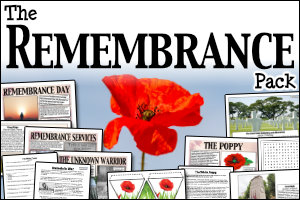
- Download our Remembrance Pack for a wide range of cross-curricular ideas and resources, including comprehension texts and display resources.
- Visit the British Legion site for Key Stage 1 or Key Stage 2 for a huge range of resources.
- Poppy Scotland has a great classroom area on their website.
- Write a thank-you letter to someone who helps others, such as a member of the armed forces.
- Read one of these books suggested by School Reading Lists.
- Create acrostic poems using words like PEACE, REMEMBER, or HOPE. You can use our REMEMBER acrostic template.
- Use our teaching ideas for Michael Morpugo’s War Horse.
- Discuss what the meaning of the word “peace” is and what it means to members of the class. Create a class book titled “What Peace Means to Me”.
- Collect synonyms and antonyms for “brave”.
- Interview each other, family members or school staff about what remembrance means to them.
- Create a gratitude alphabet (e.g. A is for ambulance, B is for bravery…)
- Find an image of a peace celebration from history, such as this event marking the end of World War 1, or this image of New York on VJ Day 1945, and write a newspaper report about it.
- Create a comic strip about remembrance.
- Write a letter to your future self about what you want to remember from this time in your life.
Maths:
- Look at these peace symbols from around the world. Sort them according to the number of lines of symmetry they have.
- Create a budget for a stall or event to raise money for a remembrance charity.
Science:
- Use our Sound Pack to learn about how we hear sounds. Have a minute of silence – what can you hear? Describe what is happening in your ears and brain.
- Explore the life cycle of a poppy with this fantastic sensory story from the Sensory Trust.
- Discuss what materials are used for memorials and why they are chosen.
- Try some of these memory experiments.
- Watch this video explaining how the brain makes memories.
Computing:
- Record a podcast about remembrance. What do you remember? Why is it important to you?
- Create a class blog post reflecting on peace.
- Use an app or program like Scratch to animate a dove flying.
- Design a digital thank-you card.
- Use a photo editing app to create a collage of peace images.
Design Technology:
- Design and build a peace monument or memorial using recycled materials.
- Fold an origami dove.
- Create a class memory box. What would you put in it?
- Design a peace- or memory-themed board game.
Art:
- Create poppy prints using sponges, fingerprints, potato printing or stamps.
- Create a collage of smiling faces or peaceful scenes.
- Look at famous artworks on the theme of peace, such as Red Poppy (by Georgia O’Keeffe), Peace Dove (by Banksy) and Peace Window (by Marc Chagall).
- Create a stained-glass effect remembrance window with tissue paper.
- Make poppies from paper plates or egg boxes.
- Design a peace-themed bookmark.
Music:
- Learn and perform a song about peace or kindness, such as John Lennon’s Imagine.
- Listen to Gustav Holst’s Venus, the Bringer of Peace from The Planets.
- Use different instruments to represent emotions like calm, courage, or hope. Download our feelings cards and discuss which instrument might be used to represent each emotion.
- Compose a short melody to accompany a poem about memory or remembrance such as In Flanders Fields by John McCrae.
Geography:
- Research remembrance day traditions in different parts of the world.
- Discuss where memorials are placed. Why do you think they are put in those locations? What would you need to think about if you were planning a memorial?
- Create an information sheet for a peace monument or statue in your area.
History:
- The British Legion’s teaching resources page links to lots of history resources.
- Download our World War 1 and World War 2 Packs for an enormous range of resources.
- This resource about Dogs in War was created for KS3 children, but the text is accessible for older primary children too.
- Visit the BBC Teach Remembrance Day page for lots of ideas.
- Use this CBeebies video to explore the origins of Remembrance Day with younger children.
- Our Remembrance Pack has lots of history resources, including information about war memorials around the world.
- Read about the history of the two-minute silence.
- Find out about the history of the poppy as a symbol of remembrance by watching this video.
Physical Education:
- Try this Pirouette to Peace dance activity from BBC Bitesize.
- Use this dance sequence about The Blitz with older children.
Religious Education:
- Use this assembly from the BBC for children aged 7-11.
- Explore symbols of peace across the world. Why do you think that peace symbols are important?
- Light a candle. Discuss how candles are used for remembrance in different faiths.
- Make a list of religious festivals that include remembrance, such as the Dia de los Muertos and the Obon Festival.
- Make a list of the ways different religions remember, such as lighting candles, saying prayers and so on.
Languages:
- Create a poster with the word for “peace” or “remembrance” in different languages.
- Write a thank-you message in another language.
PSHE:
- Discuss what it means to remember and why we do it. What kind of emotions do we feel when we remember something?
- Create a “Kindness Tree” or “Remembrance Tree” with leaves of compliments or memories
- Create a class display of “What Peace Means to Me”
- Write thank-you notes to school staff or community helpers
- Discuss how to resolve conflicts peacefully. This page from BBC Bitesize has lots of resources.
- Research the work of remembrance organisations across the world, such as the Royal British Legion (UK), Royal Canadian Legion, Returned and Services League (Australia), the RSA (New Zealand) and the Commonwealth War Graves Commission.