Ages: 5-11
Contributor:
Emilie Moon
Contributor:
Emilie Moon
Can your pupils find these words in their dictionaries and record the pages they found them on?
If you use this resource with your children, let us know by commenting below!
Can your pupils find these words in their dictionaries and record the pages they found them on?
If you use this resource with your children, let us know by commenting below!

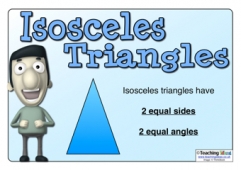
Help your children to learn about triangles with our handy posters! Five posters are available below, giving information about equilateral, isosceles, scalene and right-angled triangles.
If you would like us to make posters for other subjects / topics, please let us know!




A Powerpoint presentation that gives children clues about particular story characters. Can they use the clues to guess the characters?
Thanks to Emma for sharing this resource. If you have any useful teaching ideas or resources to share, please get in touch!
An activity sheet to help children learn about associative law.
Thanks to Kate for sharing this popular resource. If you have any useful resources to share, please get in touch!

This lovely kind deeds card is a great way of getting children involved in the feast of Ramadan!
It could be given out as a home learning activity or kept in class to be filled out as a team activity throughout the month – the choice is yours!
This resource is from our Ramadan Pack. Visit Teaching Packs to download more resources like this.
I developed a method of starting to teach algebra a number of years ago – getting the boys to invent it themselves since any mention of the word ‘algebra’ got an instant and negative “I can’t do that” reaction.
I start with ‘Spud the Airport Manager’ problem (yes, he was a real person in that job):
The next step (a few lessons later) is to have food in each type, so they learn that 9L can be done as 9 x 3 jelly beans = 27 jelly beans which means they can substitute numbers for letters.
Once the boys are comfortable with this and proficient at doing it, we go on to solving equations:
This gives the boys a basic method of attack in 2 simple rules – SAMDEB is the order, and ‘do the opposite operation’.
The boys start with simple equations and can rapidly work up to 3x/2 -15 = 28
NOTE: I do NOT give them whole number answers in most cases or they just tend to guess. Some people teach a ‘back track’ method, but I find the boys do not learn to write out simple, clear steps downward and instead do a ‘run on sentence’ type of maths or get stuck if there is an x on both sides of an equation. I’ve taught ‘bottom band’ maths classes this way, and even the least able and most scared can manage.
Now that I just do day relief teaching, I find even classes above Year 9 level have a problem with algebra and do a basic lesson on this, often to, “Why did no one tell us this before? That makes it much easier.”
Some boys need a more ‘physical’ method, and I have resorted to using numbers on sticky labels on a board, where the boys actually pick up and move the sticky labels/numbers to solve an equation.
Rearranging equations such as F=mgh or a= (vel 2 – vel 1)/t just use the same rules. You are just moving the letters rather than a number.
The main thing students must do is practice on lots of problems of assorted variations.


A selection of posters which could be used as part of a display about fractions.
Let us know if you use these in your classroom!

The resources below can be used when children are learning about China in their lessons. They can also be used as part of Chinese New Year celebrations.
The resources include:






Download our free set of Commonwealth posters, with 12 pages of information about the Commonwealth. The information uses child-friendly language and appropriate images, so they are perfect for use in the classroom. You can use them with your class in some of the following ways:
If you can suggest other ways to use these resources in the classroom, tell us in the comments…
1) The Maths part of this lesson is based on a short play, which should be performed by four children at the start. Before the lesson, you will therefore need to ask for four volunteers (consisting of at least one boy and two girls – the narrator can be a boy or girl). The four roles in the play are Jamie and Lucy (two children who are staying at their Granny’s house while their parents are on holiday), Granny (who is fed up with the children being bored) and the Narrator.
2) You will need to practice the play beforehand, and each child will need a script (with their part highlighted). The scripts for the play can be found below.
3) At the beginning of the Maths Investigation lesson, ask the actors to perform Part 1 of the play.
4) Discuss the play with the class to make sure they followed what happened. Discuss what they should do now. This should involve using the numbers 1, 2, 3, 4 and 5 to make other numbers (up to 99). Each of these numbers can only be used once, and you can use addition, subtraction, multiplication and division. For example,
1 | Already got |
2 | Already got |
3 | Already got |
4 | Already got |
5 | Already got |
6 | 5 + 1 |
7 | 5 + 2 |
8 | 5 + 3… 4 + 4 is not allowed (because you can only use each number once in a sum). |
9 | 5 + 4 |
10 | 5 + 4 + 1 |
11 | 5 + 4 + 2 |
12 | 3 x 4 |
13 | (3 x 4) + 1 |
14 | (3 x 4) + 2 |
15 | 3 x 5 |
… and so on |
A worksheet for the children to write on can also be found below.
5) About halfway through the lesson, stop the class and ask the actors to perform Part 2 of the play.
6) Discuss the consequences of Part 2 of the play and ask the children to continue. They are now allowed to use the numbers 6, 7 and 8 to find the missing numbers (and those numbers which they could not find before).
7) At the end of the lesson, share the children’s results and discuss their findings. Discuss how some numbers can be made in many different ways, but some can only be made one way.
8) A large list could be put on the wall, showing how each number can be made. The children could add to this as they discover new ways of making numbers.
This activity provides a very good opportunity to teach the children about brackets and their uses, as they will need to know about making sure which operations are carried out first.
Craig McKee has contributed a spreadsheet which could be used by children to record their results. You can download it below.


