Ages: 7-11
Contributor:
Debbie Pegg
Contributor:
Debbie Pegg
A set of Maths problems based on a trip to RHS Wisley (but questions could be adapted for different locations).
If you have any useful resources to share, please get in touch!
A set of Maths problems based on a trip to RHS Wisley (but questions could be adapted for different locations).
If you have any useful resources to share, please get in touch!

Use our teaching ideas with this short video about what happens when a lonely fox hunts a little mouse.
Which of the ideas below will you try with your children?

A poster that features a range of vocabulary linked to multiplication.
We also have similar posters, covering addition, subtraction and division.
The class are told of the game based on the ‘Who Wants to be a Millionaire?’ TV programme.
All the children sit at their tables and the teacher selects a child to play the game by having a ‘fastest brain first’ Maths question. The child who gives the correct answer the quickest comes to the front of the class to play.
When in the hot seat, the child has to answer three (or more) questions based on the learning objectives. These questions need to be answered as quickly as possible, and only the first answer can be accepted. At the same time, the rest of the children are told to think of the answer as well as, if the contestant gets it wrong, you will be picking another player who has the right answer to sit in the hot seat.
Whilst in the chair, the contestant gets two ‘lifelines’ to help him/her. These are ‘ask the audience’, in which the majority of right answers from the rest of the class could influence the answer, or ‘phone a friend’, where the contestant is allowed to ask one of his/her class friends to help them.
This activity is a great oral / mental starter but could be used as part of the main teaching activity.
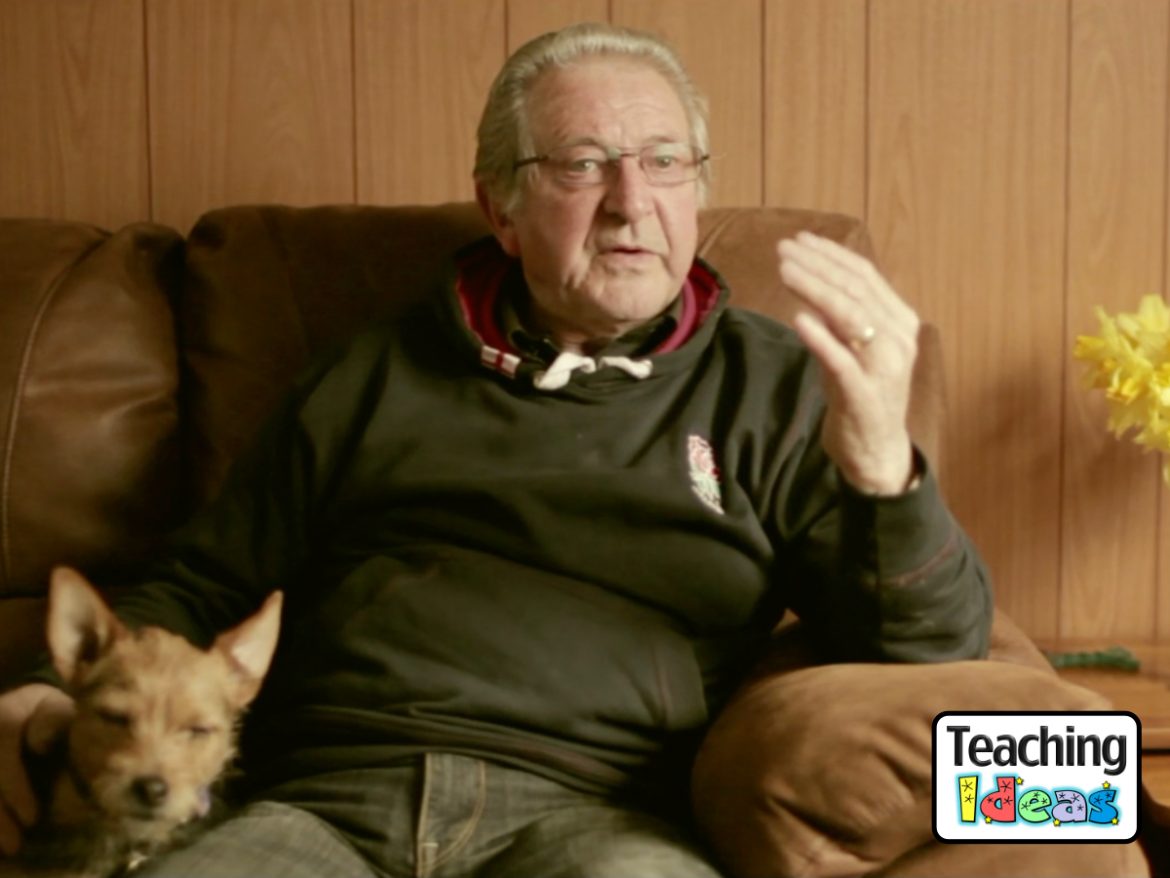
Tom Clarke is a man who lives and breathes hunting for treasure. What began as a hobby in his early twenties quickly became a full-fledged obsession.
Watch this video with your children, and then try some of our teaching and activity ideas below.
Have a large clear plastic jar (e.g. sweetie jar) and a box or bag of Duplo or largish wooden bricks. Label the plastic jar “Reward Jar” or something that the children have chosen.
A cube is placed in the jar by a child when he/she does something that you want to reward them for. It does not have to be for academic achievement, anything at all, e.g. sitting well during circle time, helping another student, being able to stand in line properly etc. It means that you can differentiate the reasons why a pupil puts a cube in the jar according to their abilities.
When the jar is full, the whole class gets to choose what treat they would like from a choice given by their teacher. e.g. toy time, special snack treat, jigsaws, colouring – whatever you want to offer.
The jar is then emptied to start again.
This game is used in our recreational gymnastics group within our gymnastics club. It is part of the warm-up to raise heart rate and body temperature for the gymnastics session ahead. It is also high on the fun factor, and the children love it. It is nothing more than a version of “Stick-in-the mud”. We call it “Tickly cat”.
The person who is “on” is the cat, and she chases the other gymnasts (the mice!) and tags the mice. The mice then “fall asleep” lying on the floor in a star shape, and they don’t “wake up” until one of their friends tickles their tummy.
The game continues until everybody has had a go at being the cat or the time limit for the warm-up is finished.
All our gymnasts really enjoy this game, and there are usually a lot of smiles all around!
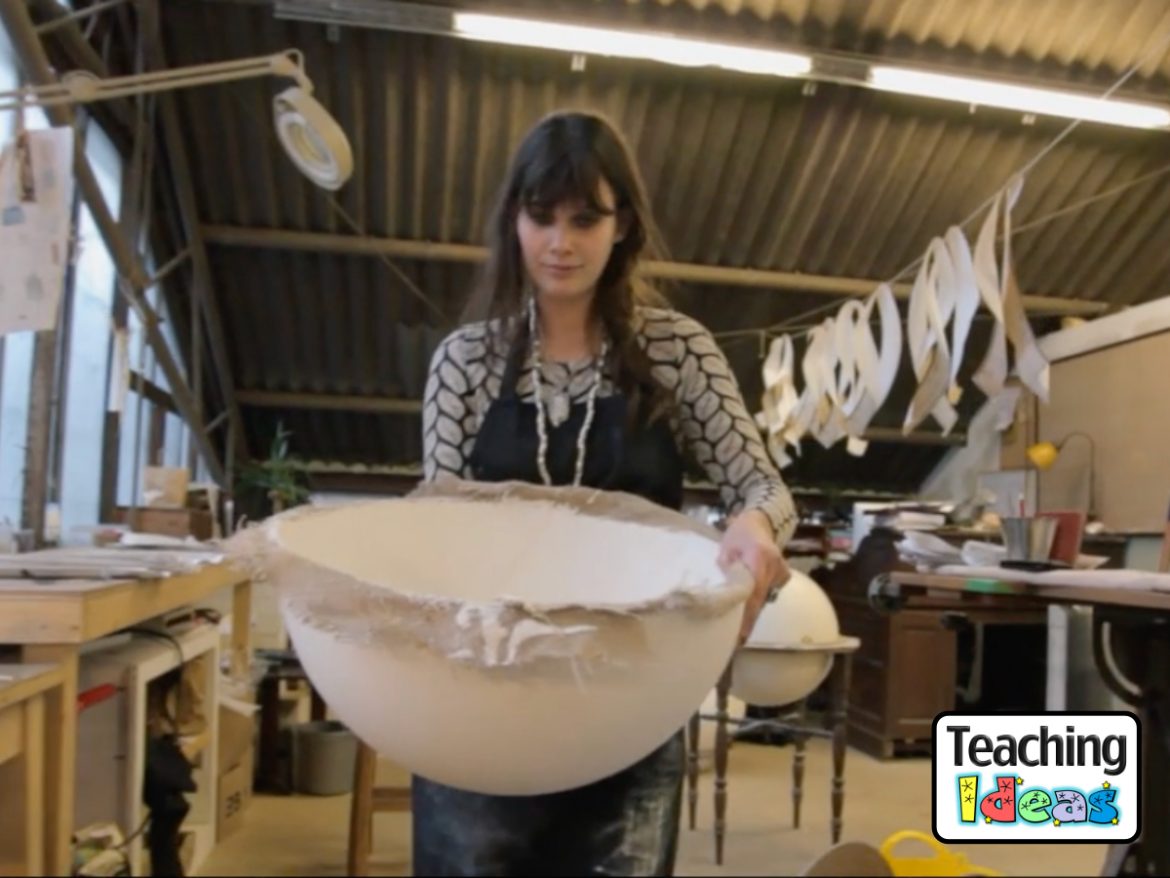
A short film about Peter Bellerby, artisan globemaker and founder of Bellerby and Co. Globemakers.
Watch this video with your children, and then try some of our teaching and activity ideas below.
This idea is suitable in French or English. It is called the 1-2-3 game.
Each child stands behind their chair and chooses one to start off. They start at one and can say up to 3 consecutive numbers, e.g. 1 or 1,2 or 1,2,3. The next child follows on with up to three numbers e.g. if the last one said 1,2, then this child can say 3 or 3, 4 or 3,4,5. You continue like this around the room, and the one that has to say 11 is out and sits down.
The next child starts from 1, and it all follows again until a child would have to say 11 again. The last one standing is the winner.
It is a great game and good for teaching numbers to 10 in French and Maths strategies – the kids plan to get others out and make it so people are made to get their friends out.
This project involves designing a package for a food product. The food product in question could be specified by the teacher, or the children could choose for themselves.
1) Look at packaging made by food companies. What are they made out of? Why was this material chosen? What information can be found on the packaging (weight, product description, ingredients, logo, picture, nutrition information…).
2) Disassemble the packaging. How was it made? If the packaging is a box, what is the net like? Are there any other nets which will make the same box?
3) Discuss what happens to the materials once they have been used. Can they be recycled? Can they be used again? Can the packaging be made from any other materials?
4) Ask the children to design their own packaging, using the information that they have learnt from the previous activities. They could even design a few different types of packaging and conduct some consumer research (asking other children) to find out the favourite.
5) While the children are designing their packaging, they should consider the following:
6) Once the product is designed, the children can make their packaging.
7) When the packaging has been made, they can evaluate their product, and they could conduct some more research to find out what others think.
8) The children could also create some advertising to promote their product. This could be in the form of a poster, a TV advert, or a radio advert.