464
Buy This Book * More books by Tom Percival
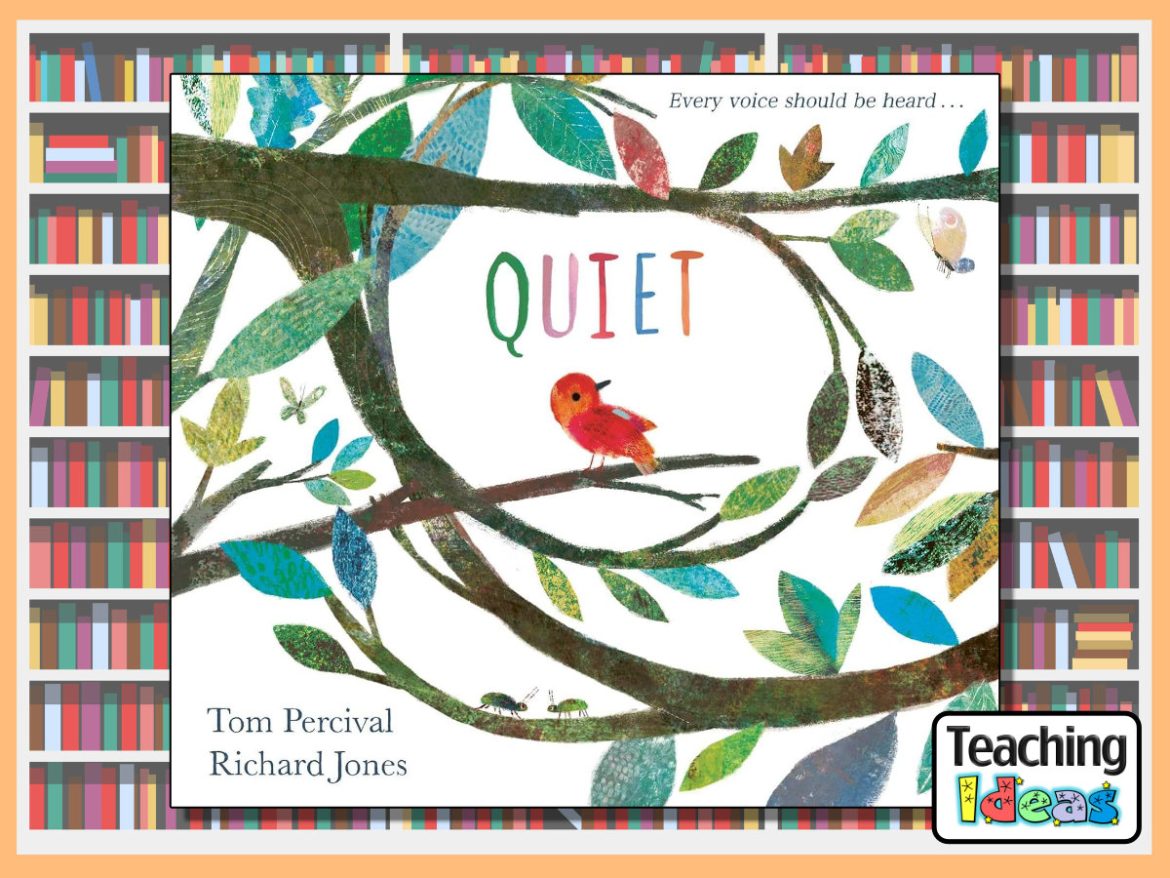
Quiet is a touching tale of courage and how sometimes the smallest voice can deliver the biggest message.
English:
- Write an acrostic poem based on the word ‘QUIET’.
- Can you find examples of onomatopoeia in the story (e.g. swoosh and rumble)? Can you think of any others?
- Make a list of new and unfamiliar words (e.g. ominous and riotous). Can you find their definitions?
- Write a newspaper report about the destruction of the woods.
- Add some speech / thought bubbles to the illustrations to show how the little bird (and the other animals) feel at different points in the story.
- Write a persuasive letter to encourage people to protect areas of woodland.
- Create a diary entry from the little bird’s point of view about her day.
- Write a newspaper report about a time in the future when your voice will be heard.
- Write a new story about this little bird. What might happen to her next?
- Watch this video featuring the author Tom Percival discussing emotions. What questions would you like to ask him?
Maths:
- How many different animals can you count in the illustrations?
- Record the noise levels in your classroom at different times of day, then use them to create a variety of charts and graphs.
Science:
- What does ‘Quiet’ mean? What is the opposite of quiet?
- How do we hear sounds? Create a report to teach others about this topic.
- Sort everyday sounds into loud and quiet sounds.
- Make a list of plants and animals that you might find in woodlands near where you live.
- Choose one of the animals in the illustrations and write a report about it.
Computing:
- Design a game in which a bird has to fly and warn other animals about a potential danger.
- Create an animation of the little bird flapping its wings.
- Create some illustrations of birds and other woodland animals using drawing software.
- Design some posters that provide strategies for staying calm during times of stress.
- Record the sounds in different places around your home / school. What can you hear? How would you describe the noise level?
Design Technology:
- Design and make a bird box for the little bird to live in.
- Design and make a ‘calm box’ to store items that can help you stay calm.
- Make a model of a bird with flapping wings.
Art:
- Can you create some illustrations of the bird in the story?
- Look at the illustrations of the woods in the book. Can you make similar pictures using photos of a nearby woodland?
- Look at the colourful illustration near the end of the book, when the animals are all singing. Could you use this technique in your own picture?
- Watch the video above and use Tom’s tips on drawing eyebrows to give your characters different emotions.
Music:
- Investigate different instruments. How are they played? How can people play them quietly and loudly?
- Listen to your favourite songs (or pieces of classical music) and identify periods of quiet and loud music. How and why do musicians change the volume of a song?
Geography:
- Create a story map that shows different places from the story. Add labels to show what happened in each location.
- Create a map showing a journey from your home to a nearby woodland. How will you get there?
- Make a map that shows loud and quiet places around your home or school.
Religious Education:
- Research sacred spaces that are designed for quiet reflection (e.g. churches, temples and mosques).
Languages:
- Find out the word for ‘bird’ and ‘quiet’ in other languages. Make some posters to teach these to others.
PSHE:
- Have you ever been in a group of people and felt unable to speak?
- What could you do to help a person who is being quiet but wants to join in with a group?
- Do you enjoy periods of quietness? Are there any particular places that are quiet and help you feel calm? What are your favourite quiet moments?
- The story tells us that ‘everyone has something to offer’. What does this mean? What do you have to offer to your family, community and to the world?