Ages: 5-11
What can the Easter chick see? Can your children finish this picture?
You could also use this resource as a writing template. Could your children write a picture about an adventure this chick might have?

What can the Easter chick see? Can your children finish this picture?
You could also use this resource as a writing template. Could your children write a picture about an adventure this chick might have?

Write an Easter story, or a recount of a favourite Easter memory, using this Easter writing template.
Add a comment below if you plan to use this resource in your lessons!

Three free banners about Easter to use on a classroom display board.
If you use one of these banners in your room, let us know. We would love to see your photos!

Use this writing prompt in your pirate-themed lessons!
Can your children explain why this pirate is walking the plank?

Create a ‘Wanted’ poster for a pirate using this free printable activity template.
You could also use this resource when your children are learning about a fictional (or another historical) person who may be wanted for a crime.
Let us know if you use this activity in your classroom by adding a comment below!
A collection of official resources from the Olympic Museum, offering reference information about the Olympic Games.
The resources include:
These resources also include examples of activities and bibliographical references.


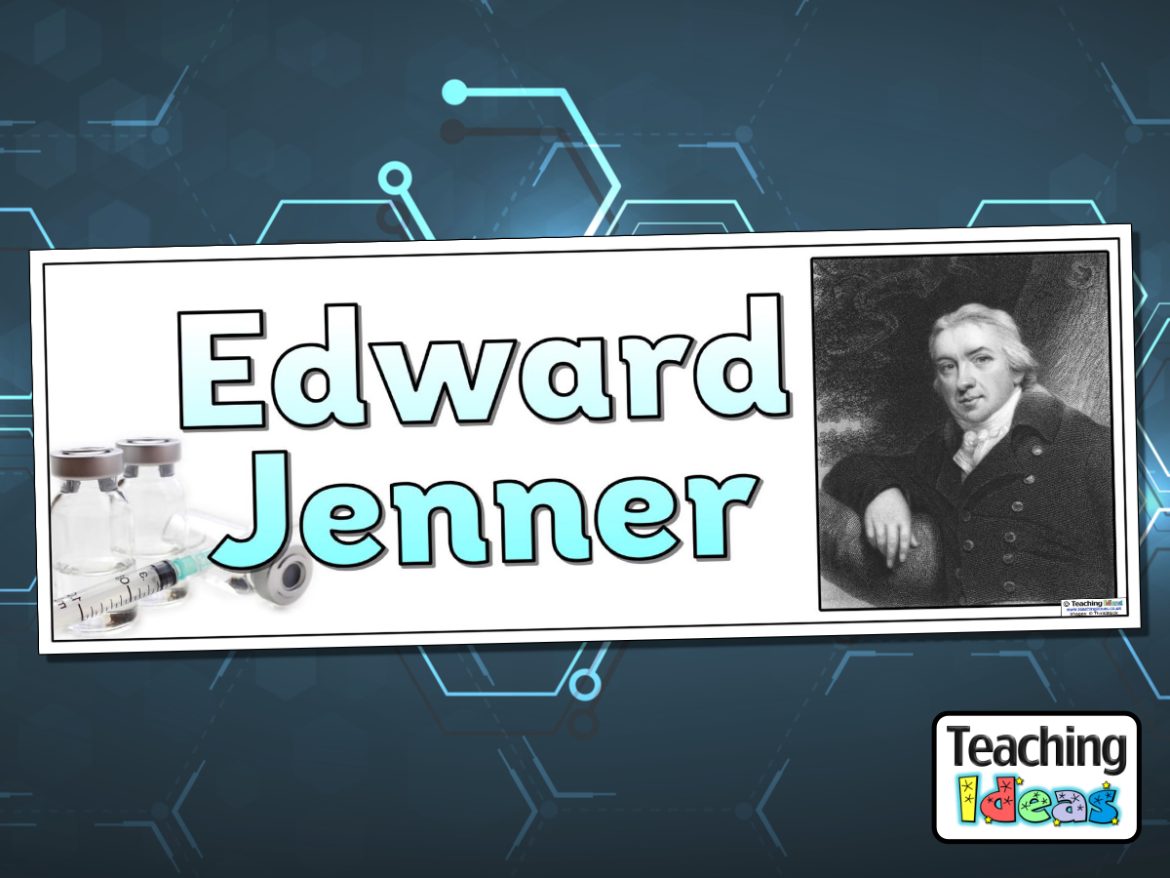
Edward Jenner was the pioneer of the smallpox vaccine, the world’s first vaccine.
When your children are learning about his life and achievements, make a classroom display using this free printable banner.
If you would like us to make banners and display resources based on other famous people or topics, please let us know!
This work is best carried out in the assembly hall or other large space.
I used this originally because my children (Yr6 special needs) couldn’t grasp graphs from mere paper examples. We used the graph to show the size of the shadow relative to the distance from the light source, and they had to estimate the size of the shadow when they only knew the distance from the light source. We found this out by using a rope to show the path of the coordinates and extending it in the same direction. We did a brief ‘follow the leader’ to see where the path would lead us after deliberately walking in the wrong direction so the children could correct me.
At the end, the children drew what we had done and hey, presto! They all produced a graph which they hadn’t understood the day before. I found that lots of children have difficulty with coordinates. They understand the x but then want to walk back to the y-axis to meet up. By watching the straight paths other children took, the others eventually got the idea.
This is an idea for getting children to talk simply to one another in French.
You need a small soft toy (I have a frog – no pun intended) that will fit into a desk. It should have a French name. Mine is called Georges.
Choose someone who will have to locate the toy and ask them to leave the room or cover their eyes while you give the toy to another child. They should hide the toy. The task is then for the child who left the room to find the toy. They can ask anyone but must say, “Bonjour, Je m’appelle (child’s name), et Toi?”
The child they have asked should respond with,”Bonjour, Je m’appelle (their name),” or “Bonjour, Je m’appelle Georges,” if they have Georges.
To make the task easier, inform the guesser which table the toy is on (or which part of the class the toy is in).
I find that three guesses are enough. If the toy isn’t found, then a rousing chorus of ‘Ou est Georges?’ usually brings him out.
Wendy says…
My students of all ages love this activity! We do it in French, and her name is Fifi, and also in Spanish, and we call her Chi chi, which works especially well for grades K – 4. You can also play with where you live or where you are from and make your animal be from a certain place.
Students stand in a circle. The student holding the ball must say one of their unit vocabulary words in both English and Spanish (or another language you are learning). If they do this correctly, they may pass the ball to another student, and then that student repeats the same process.
Encourage quick thinking, reminding the students that the ball is a hot potato.
This activity is a lot of fun, and the students get a break from their seats.


